
Firearm Tips from a Professional
A dirty firing pin channel is the number one cause of light primer strikes in striker-fired pistols, not the ammo. If you’re having reliability issues, strip the slide and clean that channel before you blame your magazine or your 115-grain FMJ. Here are the essential tips you won’t get from a manual.
Mastering the Four Rules is Just the Start
Treat every firearm as if it’s loaded. Never point it at anything you aren’t willing to destroy. Keep your finger off the trigger until your sights are on target. Be sure of your target and what’s beyond it. You know these. The professional application goes deeper. “Finger off the trigger” means indexed along the frame, above the trigger guard. This isn’t just for safety; it’s the foundation of a consistent, repeatable draw. When you practice dry fire, you must enforce this discipline every single time. A common failure point for new shooters is letting their support-hand thumb ride the slide release on a pistol like a Glock 19 or Sig P320, causing a failure to lock back on an empty mag. Grip high and tight, but keep that thumb clear.
Dry Fire is Your Most Valuable Tool
You don’t need a range to become a better shooter. Dedicate 10 minutes a day to dry fire with an unloaded, cleared firearm. Use a dummy round like a Snap Cap for practicing malfunction drills and reloads. Focus on the fundamentals: press the trigger straight to the rear without disturbing the sight picture. Use a small target like a dime taped to the wall. If your front sight moves when the striker or hammer falls, you’re anticipating recoil. This is the single fastest way to diagnose and fix flinching. For rifles, practice shouldering and obtaining a proper cheek weld consistently. A tool like the Full Auto CO2-Powered Air Rifle can also bridge the gap between dry fire and live fire with affordable, low-recoil training in your backyard.

Ammunition Selection is Not One-Size-Fits-All
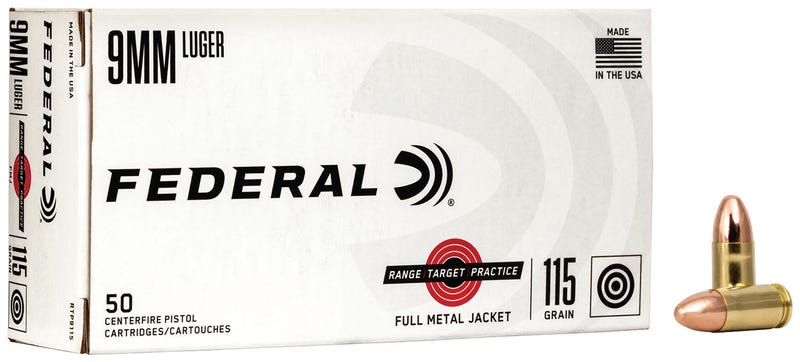
Your firearm is a system, and the ammo is a critical component. For a new 9mm pistol, start with 500 rounds of quality 115-grain or 124-grain FMJ range ammo, like FEDERAL RANGE AND TARGET BRASS 9MM, to break it in. Defensive ammo is different. You must fire at least 50-100 rounds of your chosen defensive hollow point (e.g., Federal HST, Speer Gold Dot) through your specific gun to verify reliability. Some micro-compacts can be finicky with certain hollow point shapes. For .223/5.56 rifles, understand that 55-grain FMJ is fine for plinking, but if you’re zeroing an optic, use the same grain weight you plan to rely on. Switching between 55-grain and 77-grain OTM will change your point of impact.
Maintenance is More Than a Field Strip
Running a bore snake through the barrel after a range session is not a cleaning. Carbon and copper fouling build up in the gas system of an AR-15, the locking lugs of a bolt-action rifle, and the extractor claw of your pistol. Use a proper solvent and brush. For lubricant, remember: “Oil is for friction, grease is for wear.” Use a light oil on sliding parts like pistol rails. Use a heavier grease or high-quality lubricant like Slip 2000 EWL on high-pressure points like AR-15 bolt carrier group cam pins. Over-lubrication attracts grit and can cause malfunctions. A simple product like MARKRON GUN PRODUCTS STOCK SCRATCH ERASER is also part of maintenance—keeping wood stocks in good condition protects your investment.
Choosing the Right Firearm for the Task
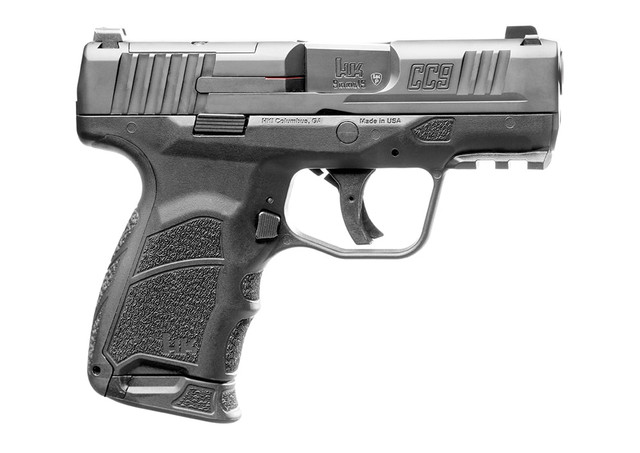
Don’t buy a gun based on internet hype. Define its purpose. A full-size 9mm like a Glock 17 is ideal for home defense and competition but difficult to conceal. A micro-compact like the HK CC9 excels at concealed carry but is snappier to shoot and holds fewer rounds. For a ranch rifle, a lever-action .357 Magnum might be perfect; for long-range precision, you need a bolt-action in 6.5 Creedmoor. Handle the firearm before you buy. Can you reach the controls? Does the trigger press suit you? Does it point naturally? Texas Gunstore’s HANDGUNS collection and RIFLES collection are sorted to help you find the right tool.
FAQs
How often should I clean my firearm?
After every range session, perform a basic clean: bore, chamber, and wipe down. A deep clean (striking the firing pin, cleaning the extractor) is needed every 500-1000 rounds. A defensive firearm that sits in a safe should be inspected and lightly lubricated every 3-6 months to prevent corrosion.
What’s the best way to store a firearm for home defense?
Secure but accessible. A quick-access biometric or simplex lockbox bolted to your nightstand is ideal. The firearm should be stored in a ready condition—chamber empty or loaded per your training and comfort level—with a magazine inserted. Regularly check that your chosen storage method still functions quickly and reliably.
First, ensure the magazine is clean and the feed lips aren’t damaged. Try a different brand of hollow point; some designs have more abrupt ogives that can hang up. If problems persist, the feed ramp may need a gentle polish. For persistent issues, consult a gunsmith. Always test your chosen defensive ammo extensively, which is why we stock a variety of magazines, like the Taurus Magazine For Taurus 24/7, to ensure you have reliable spares.
Browse our firearms collection
Last updated: March 27, 2026
